Table of contents
Adventure travel is booming again, and Europe’s city-break market has followed, with Prague returning to the top tier of short-haul destinations as airlines restore capacity and travellers chase “authentic” experiences. Yet the same surge that fills flights and hotel lobbies also tests the social fabric of historic neighbourhoods, where residents live with noise, crowding, and rising prices. Excursions can still be a force for good, but only when curiosity is matched with etiquette, and when travellers understand how small choices ripple through local culture.
Before you go, learn the local “no”
What does disrespect look like in a city built on tourism? Sometimes it is loud and obvious, but more often it is banal and cumulative: a selfie that blocks a tram stop, a “quick” drone shot above a crowded bridge, or a stag-party chant echoing off centuries-old façades at midnight. Prague is not alone in facing these tensions, yet it has become a case study in how a destination’s image can drift away from daily life. Czechia welcomed roughly 22 million guests in collective accommodation establishments in 2023, according to the Czech Statistical Office, and Prague concentrates a disproportionate share of that traffic, especially in peak spring and summer weeks. When visitor flows pile into the same few streets, etiquette stops being a moral add-on and becomes basic urban cohabitation.
The cultural “no” often has little to do with formal rules and everything to do with context. In churches and synagogues, for example, silence is not a quaint tradition, it is how worship spaces remain usable for believers and respectful for everyone else, and in Prague’s historic centre, where religious sites sit beside cafés and souvenir shops, the shift from lively street to solemn interior can be abrupt. Dress codes vary by venue, but covering shoulders in sacred spaces, lowering your voice, and asking before photographing people are simple habits that travel well. Another frequent friction point is alcohol, not because Czechs do not drink, but because public drunkenness, shouting, and “destination party” behaviour turn public space into a theme park, and residents notice quickly.
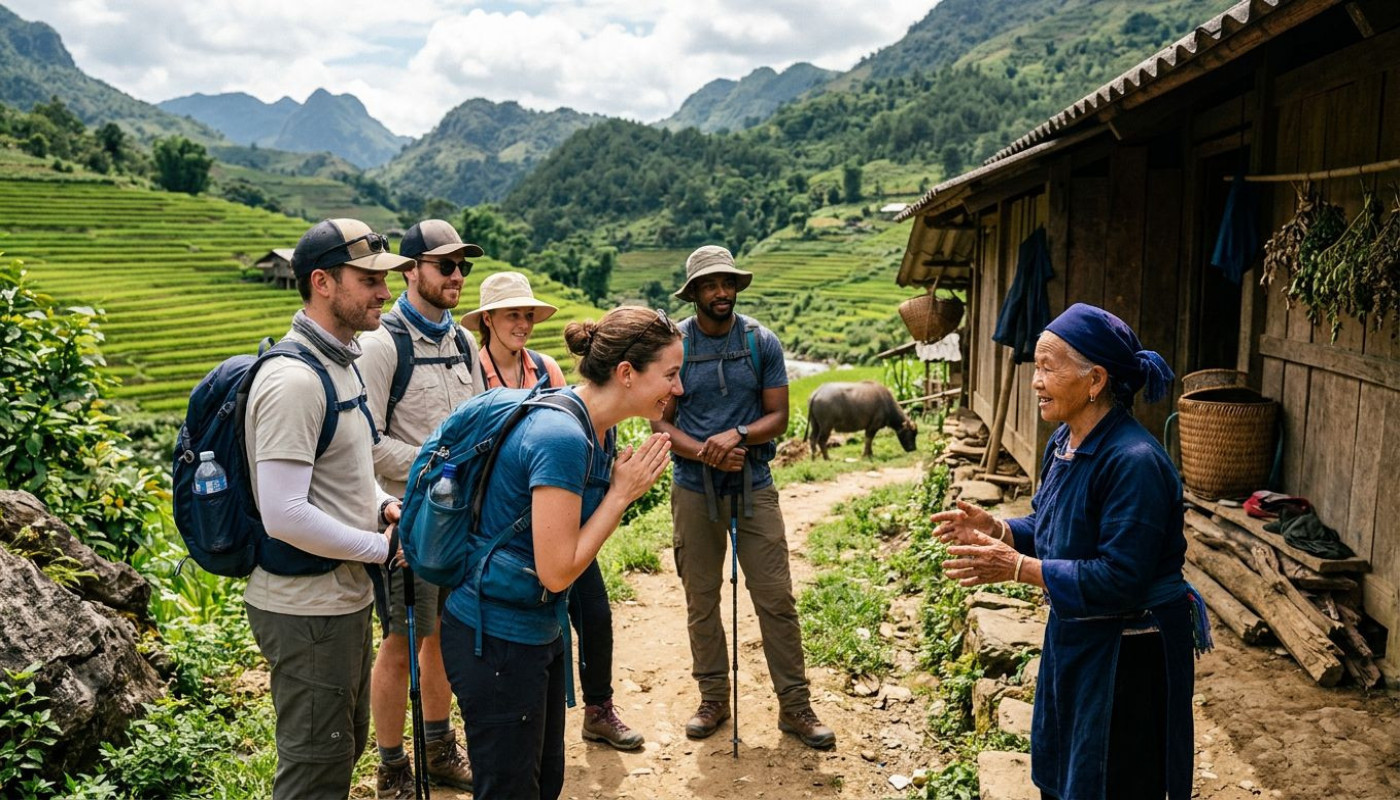
Good preparation also means learning a few phrases and the norms around them. “Dobrý den” for hello, “děkuji” for thank you, and “prosím” for please are not linguistic trophies; they signal that you recognise a living culture rather than a backdrop. It helps, too, to understand that Central European service culture can be more direct than in North America, and that briskness is not hostility. When travellers interpret directness as rudeness, the interaction hardens on both sides, and the smallest transaction becomes a story of grievance instead of a human exchange. Etiquette, in other words, is not about walking on eggshells; it is about reading the room before you enter it.
In Prague, tourism pressure is measurable
How crowded is “too crowded”? Cities increasingly answer that question with numbers, not feelings, and Prague’s data illustrates why the debate is more than anecdotal. Eurostat statistics for 2023 show Europe’s tourism recovery continuing, with nights spent in tourist accommodation across the EU surpassing 2.9 billion, and major capitals absorbing a large share of that rebound. Prague’s historic core is compact, and its signature sights, Charles Bridge, Old Town Square, Prague Castle, funnel people into narrow corridors where a single coach arrival can change the experience for thousands. Even if individual visitors feel invisible, the aggregate footprint is easy to see in noise complaints, waste volumes, and local transport congestion.
Economic impact cuts both ways. Tourism supports jobs in hospitality, guiding, transport, and culture, and it helps fund restoration work that would otherwise strain public budgets. Yet the same demand can accelerate short-term rentals, shift retail toward souvenirs, and reduce the supply of everyday services for residents. These patterns have been documented across European cities, and Prague has not been immune; municipal debates over regulation of short-term accommodation have often been framed as a battle to keep the centre liveable rather than merely profitable. For travellers, the ethical question is not whether to visit, but how to distribute their spending and their presence so the benefits spread beyond a postcard triangle.
That is where excursion etiquette becomes practical. Choosing a morning slot rather than midday, visiting a second-tier museum instead of queuing for a single “must-see”, or using public transport rather than hopping into a car for a five-minute ride are not dramatic sacrifices, and they tangibly reduce peak pressure. The same logic applies to guided tours: smaller groups are quieter and easier to manage, and they are less likely to block pavements or overwhelm a courtyard. When you plan your itinerary, treat capacity as part of the destination, just like weather, opening hours, and ticket availability, and you will travel with fewer frustrations while leaving a lighter footprint.
Guides can make, or break, the vibe
Want the city to open up? Choose who interprets it. A good guide does more than recite dates; they act as a cultural mediator, translating local norms, spotting sensitive moments, and steering a group away from behaviour that would feel intrusive to residents. In a place like Prague, where history is dense and sometimes politically charged, that mediation matters. Discussions around the Communist period, the Velvet Revolution, and the legacy of the Austro-Hungarian empire can be fascinating, but they require nuance, and they are not always best served by sensational anecdotes designed to entertain.
Etiquette on a tour begins with basic logistics: arriving on time, keeping pace, and staying aware of who else shares the space. When a group forms a human wall on Charles Bridge, it does not only irritate other tourists, it obstructs commuters, vendors, and emergency access. The best operators actively design routes to avoid bottlenecks, and they adjust in real time when a square is packed or when a ceremony is under way. They also set expectations on photography, explaining where it is permitted, where it is frowned upon, and why. That “why” is the difference between compliance and understanding, and it often determines whether visitors respect the rule once the guide is out of sight.
There is also the question of where your money goes. Responsible excursions often include locally owned cafés, craft workshops, and small museums rather than only large chains in prime locations, and they may highlight neighbourhoods outside the centre, distributing footfall and spending. If you are comparing options for day trips, walking tours, or themed itineraries, having a clear overview helps you choose experiences that fit your style without defaulting to the loudest, largest product. One practical starting point for planning and comparing excursions is www.prague-trip.com, which can help travellers map options and timings before they land, and avoid last-minute decisions that usually push people into the most crowded corridors.
Respect is also about time and money
Is “respect” just manners? Not in travel, where budgets and schedules shape behaviour. Overpacked itineraries are etiquette traps: when you try to squeeze five paid attractions into one afternoon, you rush through quiet spaces, you cut queues, you eat wherever you can, and you treat staff like obstacles rather than people. Slowing down is not only more pleasant, it is often cheaper, and it allows you to spend more deliberately. Prague remains competitively priced compared with several Western European capitals, but costs have risen in recent years, especially in high-demand areas, and travellers who plan for realistic daily spending are less likely to resort to penny-pinching tactics that externalise costs onto others, like refusing public toilets and using inappropriate spaces.
Time choices matter as much as money. Shoulder-season travel, late autumn, winter outside the Christmas peak, and early spring can reduce pressure on the centre while delivering a different, sometimes more intimate, city. Even within a single day, visiting the Old Town early, then moving outward to districts such as Vinohrady, Holešovice, or Karlín for food and galleries can change the social impact of your trip. Use trams and the metro, which are efficient and reduce congestion, and remember that escalator etiquette, standing on the right, passing on the left, is not a charming detail, it is how a transport system stays fluid when volumes rise.
Finally, respect is visible in what you consume. Buying mass-produced souvenirs that have little connection to Czech craft traditions might feel harmless, but it supports a retail ecosystem that pushes out everyday shops. Seeking out Czech design, books, glasswork from reputable makers, or food products with clear provenance does more for the local economy, and it gives you a better memory than a novelty item that breaks in your suitcase. The same principle applies to nightlife: choosing venues that advertise responsible service, that control noise, and that are not built around humiliating “tourist games” helps keep the city’s hospitality scene vibrant rather than corrosive. You do not need to be perfect, but you do need to be intentional, because thousands of small intentions add up fast in a city as compact as Prague.
Plan it like a guest, not a consumer
Book early for peak weeks, budget for timed-entry tickets and public transport, and favour smaller-group excursions to reduce friction in crowded streets. Consider travelling in shoulder season, and set aside funds for locally owned businesses rather than impulse purchases in the centre. For day trips, check durations, meeting points, and cancellation terms in advance, and look for student or youth discounts where available.
On the same subject

How Unconventional Experiences Shape Your Travel Stories
From Hidden Alleys To Panoramic Hikes: Celebrating Micro-adventures In Every Journey
How To Tailor A Vacation For Thrill-seekers And Adventurers?
How Tailored Marketing Strategies Boost Tourism Attraction?

Maximizing Your Adventure: Choosing The Right Ski And Bike Rentals

Top Tips For Choosing The Perfect Sailboat For Your Next Vacation

Exploring The Benefits Of Seasonal And Off-Season Camping: A Guide To Choosing The Best Time For Your Retreat

Exploring The Best Snorkeling Spots Near Utila: An Adventurer's Guide
