Table of contents
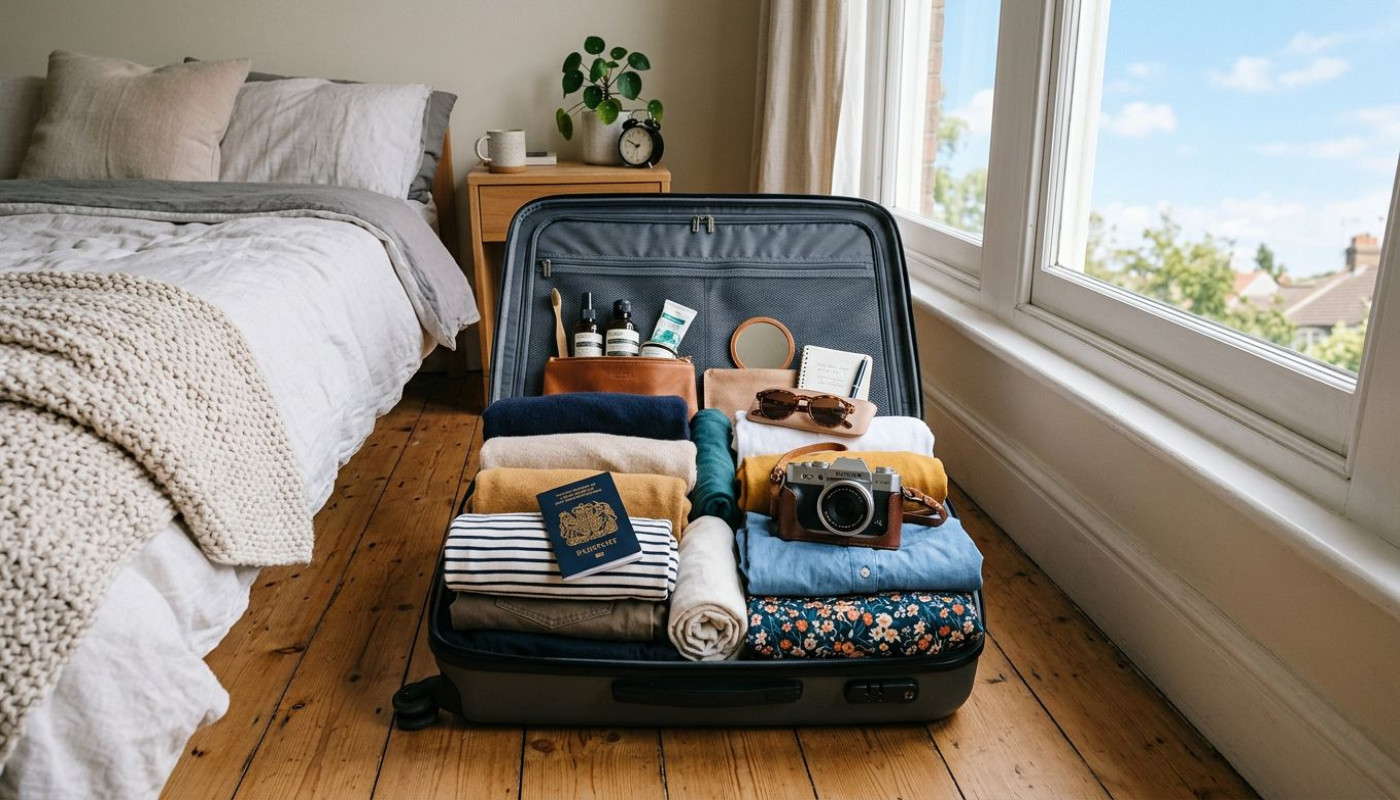
Most travelers don’t overpack because they love baggage fees, they overpack because they fear being unprepared, and airlines, security rules, and weather surprises keep feeding that anxiety. Yet the data points in another direction: lighter bags move faster, cost less, and reduce the risk of lost luggage. With carry-on policies tightening and popular destinations facing heat waves, floods, and transit disruptions, packing has become a small art of risk management, and the best “secrets” are often simple habits done consistently.
Airlines made luggage a profit center
How did a suitcase become so expensive? Over the past decade, airline pricing has shifted toward unbundling, meaning the base fare looks cheaper while add-ons do the financial heavy lifting, and baggage is among the most lucrative extras. Industry figures regularly show that baggage fees generate billions of dollars annually for carriers, and while the exact totals vary by region and year, the direction has been stable: checking a bag is no longer a routine choice, it is a line item that can rival a short-haul ticket sale.
The practical consequence is that packing is now tied to policy literacy. Most travelers can recite their flight time but not their cabin baggage allowance, even though a difference of a few centimeters can trigger a gate-check and a fee, and a difference of a few kilograms can turn “free” cabin luggage into an extra charge. The safest approach is to treat airline rules like you treat passport validity: check them before you leave, not at the airport. Measure your bag once, record its dimensions in your phone, and weigh it at home with a small luggage scale, because airport scales are not always in the traveler’s favor and stress makes people misjudge weight.
There is also a less discussed cost: time. Checked luggage adds queues, increases the odds of mishandling during tight connections, and can push you into arriving earlier than necessary, and when airports are congested, that extra buffer becomes a hidden tax on your trip. If you have ever watched a carousel stall while ground staff reshuffle containers, you already know the feeling, and if you have ever landed late only to wait another 30 minutes for bags, you have experienced the compounding effect. Packing to avoid the hold is not just about saving money; it is about controlling your schedule.
One more modern wrinkle deserves attention: lithium batteries. Power banks, spare camera batteries, vape devices, and even some smart luggage require cabin carriage, not the hold, due to fire risk. That rule pushes travelers toward carry-on anyway, and it means your packing strategy must start with electronics and safety, then build clothing around what remains. People often do the reverse, and they end up re-packing on the floor near check-in, where every second feels public.
Clothes: the math beats the “just in case”
Want the fastest way to halve your bag? Count outfits, not items. Many people pack by categories, three shirts here, two pants there, then add “just in case” layers, and the total becomes abstract. Packing by outfits forces clarity: for each day, what do you actually wear, and what repeats safely? A simple rule used by frequent travelers is to plan for a week cycle, even on longer trips, and rely on laundry. With accommodation listings increasingly offering washers, and laundromats common in urban areas, laundering once per week is often easier than dragging an extra 8 kilograms across cobblestones.
Fabric choice matters more than most suitcases. Lightweight synthetics and merino blends dry faster, resist odor better, and compress without staying wrinkled, and they allow you to wash in a sink, roll in a towel, then air-dry overnight. Cotton, by contrast, holds water and takes longer to dry, which can turn a quick wash into a damp-clothes problem, especially in humid climates. If you are traveling through coastal regions or mountain valleys where humidity spikes at night, fast-dry fabric becomes a logistical advantage, not a lifestyle preference.
The “secret” many wish they had learned earlier is that you do not need more clothes, you need fewer, better choices. Two pairs of shoes are usually enough: one comfortable walking pair and one compact alternative, and if your trip includes hikes, that walking pair can often do both if it has grip and support. Shoes are weight monsters, and they also dictate the rest of your kit, because bulky footwear forces a larger bag, which increases the chance you exceed cabin limits. If you must bring a third pair, wear the bulkiest on travel day, and pack the lighter ones, because weight is easiest to hide on your feet.
Then there is weather. Travelers often overpack because forecasts look uncertain, but modern meteorology is good at trends even when details vary. Use a trusted forecast model, check the range, then pack for the median plus one true layer, not five “maybe” items. Heat waves across Southern Europe have become more frequent and more intense in recent summers, and sudden storms can disrupt transport, so your “one layer” should be functional: a light rain shell with a hood that fits over a cap, or a compact insulating layer that works on a chilly bus and a breezy evening. Clothes should earn their place by doing more than one job.
Toiletries and gadgets: security is the bottleneck
What slows you down at airports? It is rarely the number of socks. It is liquids, chargers, and small items that scatter. The 100 ml rule for cabin liquids remains a reality across many airports, and even where screening technology has improved, the traveler cannot assume a relaxed policy, because enforcement varies by terminal and by staff. The most efficient approach is to keep all liquids in one transparent pouch, pre-sorted, and placed at the top of your bag so you can remove it in one motion, not by excavating layers under pressure.
Decanting is not glamorous, but it is one of the highest-return habits. A 50 ml container of shampoo lasts longer than most people expect, and if you already plan to buy a local sunscreen, you can leave the large bottle at home. Sunscreen is the classic offender: travelers bring a big one “to be safe,” then it leaks, and suddenly half a backpack smells like coconut and regret. Use leak-proof bottles, put them in a second zip bag, and store them upright if possible. The goal is not minimalism for its own sake, it is avoiding the cascading failures that start with a small leak.
Electronics need similar discipline. Carry one charging brick that supports multiple ports, one cable per device type, and consider a short extension cord or a compact multi-plug if you are staying in older buildings where outlets are scarce. This is not hypothetical: many hotels still have limited sockets near the bed, and if you are working remotely, you will feel that constraint immediately. A universal adapter is useful, but do not assume it includes a voltage converter, and check what your devices need, because hair tools and some appliances can fail spectacularly on the wrong voltage.
Finally, make your essentials “fail-safe.” Keep passport, cards, and one backup payment method on your body, not in your bag, and store key documents in a secure cloud folder accessible offline. Lost luggage happens, but the real trip-ender is losing identity and money. A small crossbody pouch or money belt is less about paranoia than about reducing points of failure, and it lets you move through stations and markets without constantly patting pockets. You are packing for a journey, not for your bedroom, and friction is the enemy.
A lighter bag unlocks better travel
What do you gain when you pack less? You gain choices. You can take the stairs without bargaining with your spine, you can switch trains when a line is disrupted, and you can walk an extra kilometer to a better neighborhood rather than paying for a taxi because your suitcase is punishing. Anyone who has arrived in a city with uneven sidewalks, crowded buses, or small elevators knows that baggage shapes the trip, and the difference between a manageable carry-on and an overstuffed case is the difference between freedom and constant negotiation.
This is especially true in destinations where the best experiences sit beyond the typical tourist path, and where mobility matters more than a perfectly curated wardrobe. If your plan includes mountain villages, coastal roads, or multi-stop itineraries, packing light becomes an enabler, and it also keeps your attention on the place rather than on your possessions. For travelers considering the Balkans, where landscapes shift quickly from beaches to highlands, and where day trips can turn into spontaneous overnights, a flexible packing system makes a tangible difference. Practical itinerary planning, local guidance, and transport tips can also help travelers pack with intention, and resources such as www.albania-spirit.com can be useful when you are aligning what you bring with what you will actually do.
The best system is not complicated: choose a bag that fits your airline’s strictest allowance, build a capsule wardrobe with repeatable outfits, keep toiletries and cables standardized, and leave margin for the one thing you will likely bring back, whether it is a bottle of olive oil, a handmade textile, or simply a stack of local snacks. Travelers often forget to pack space, then they solve it at the airport with an extra bag and an extra fee. Pack for the return trip on day one, because souvenirs are predictable.
There is also a psychological advantage. A lighter bag reduces decision fatigue, because fewer items mean fewer daily choices, and it lowers stress when plans change. When flights are delayed, when weather turns, and when you need to move fast, you will not be thinking about the fifth top you never wore. You will be thinking about where to go next, and that is the point of travel.
Before you zip it up
Book laundry into the plan, set a realistic baggage budget, and keep a small reserve for last-minute needs, from a local rain poncho to an extra phone data pack. Check whether your destination offers visitor passes or transport discounts, and look for any regional tourism supports or seasonal deals tied to accommodation, because saving on logistics is often easier than chasing cheaper flights.
On the same subject

Is Overpreparing Killing The Spirit Of Spontaneous Travel?
Is Slow Travel The Secret To Discovering Overlooked Destinations?
Is Your Bucket List Secretly Missing These Overlooked Destinations?
Lost Or Liberated: Embracing Spontaneity Over Rigid Travel Plans

Maximize Your Travel Experience With Early Booking Benefits
Exploring The Balance Between Cultural Immersion And Ethical Tourism?

Exploring The Shift Towards Eco-Friendly Private Transport Options

Why is Luxotica the best private driver company in Monaco ?

Complete Guide On Obtaining A Social Security Number As An Expatriate

The Most Popular Tourist Sites in the World

The Most Famous Monuments in the World

Some of the Most Visited Countries in the World

France's Most Visited Tourist Cities
